| Quantity: | |
|---|---|
YIXUN mold
8480419090
Material Selection: Typically uses PP (Polypropylene) (low cost, good toughness) or glass fiber-reinforced PP (for enhanced strength). The material must meet automotive interior standards (e.g., odor-free, low VOC emissions).
Material Preprocessing: Dry PP pellets at 80–100°C for 1–2 hours to remove moisture (prevents bubbles during injection). If coloring is needed, mix masterbatch with pellets in the specified ratio.
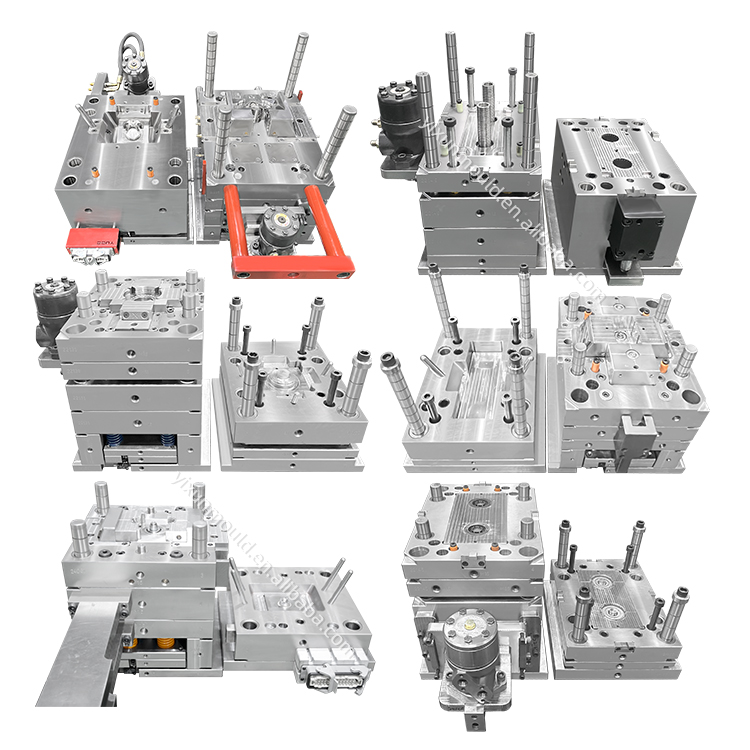
Mold Design: Create a multi-cavity injection mold (commonly 16/32/64 cavities for high efficiency) based on the clip’s structure (disc base, spiral stem, pointed tip). The mold includes cavities, cores, runners, and cooling systems.
Mold Fabrication: Use steel (e.g., P20/S136) to machine the mold via CNC milling, EDM, and polishing. Tolerances are controlled within ±0.02mm to ensure consistent clip dimensions.
Mold Testing: Install the mold on an injection machine, run small-batch trials, and adjust parameters (temperature, pressure) to ensure complete molding with no flash or material shortage.
Equipment Setup: Use a small horizontal injection machine (50–100 ton clamping force) compatible with multi-cavity molds.
Injection Parameter Settings:
Barrel temperature: 200–240°C (melting point of PP);
Mold temperature: 40–60°C (prevents clip warping from uneven cooling);
Injection pressure: 80–120MPa; holding pressure: 40–60MPa;
Cycle time: 10–15 seconds per mold (16–64 clips produced per cycle).
Molding Process:
Molten PP is injected into the mold cavity at high pressure;
Hold pressure and cool (to fill the cavity fully and solidify the plastic);
Open the mold, and eject the clips via ejector pins.
Deburring/Trimming: Remove small flash (excess material at mold joints) manually or via automated equipment (e.g., vibratory bowl + trimming mold).
Quality Inspection:
Visual check: Reject clips with shortages, warping, or color inconsistencies;
Dimensional check: Use calipers/gages to spot-check stem diameter and base size (to match automotive mounting holes);
Pull Test: Sample clips to verify pull-out force (meets automaker requirements, typically ≥50N).
Counted Packaging: Use automated counting equipment to pack clips in fixed quantities (e.g., 1,000 pcs/bag) with specification labels.
Storage & Shipping: Seal and store in a dry environment (to avoid moisture-induced warping), then ship to automakers or parts suppliers per orders.