
| Quantity: | |
|---|---|
YIXUN mold
8480419090
Overmold Technology: Precision Molding for Multi-
Material Product Excellence
First Shot (Substrate Molding): A rigid base material (e.g., ABS, PC, nylon, or metal inserts) is injected into the first cavity of the overmold to form the product’s structural core.
Second Shot (Overmolding): The substrate is transferred (via robotic arms or rotating mold platens) to a second cavity, where a soft or specialized material (e.g., TPE, TPU) is injected over specific areas of the substrate. The two materials bond at the molecular or mechanical level (e.g., via textured substrate surfaces) to create a seamless, unified part.
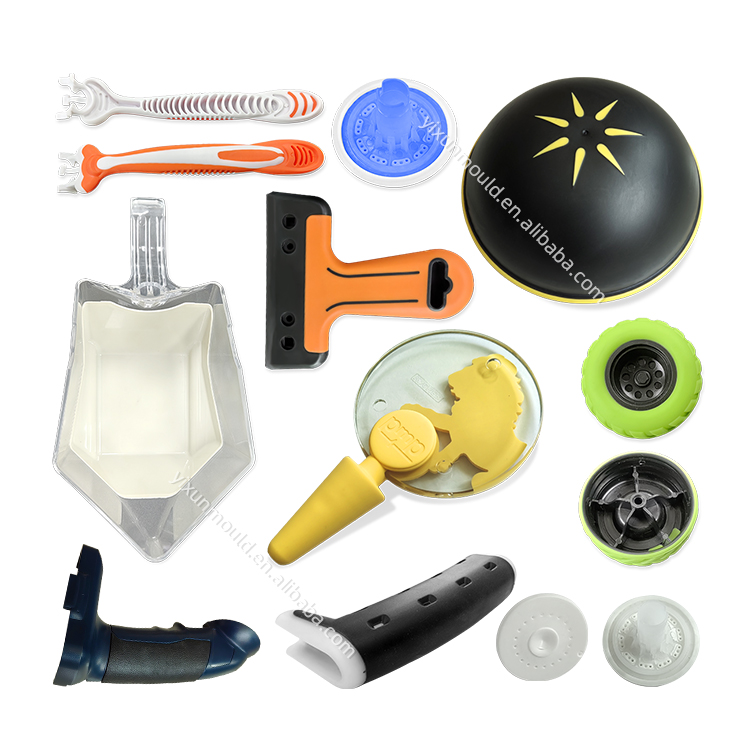
Dual Properties in One Part: Combines rigidity (for structural support) and flexibility (for grip, sealing, or shock absorption). For example:
A power tool handle: ABS substrate (structural strength) + TPE overmold (non-slip grip, vibration dampening).
A medical syringe plunger: PP substrate (precision) + overmold (leak-proof seal, biocompatibility).
Integrated Sealing: Eliminates gaps between separate parts (e.g., overmolded gaskets in water bottles), reducing assembly steps and leak risks.
Soft-Touch : TPE/TPU overmolds create comfortable, anti-slip surfaces for products like toothbrushes, remote controls, or baby bottles—enhancing user experience and brand premium.
Design Versatility: Supports complex shapes (e.g., curved edges, textured patterns) and multi-color combinations (e.g., a phone case with a rigid PC frame + colored TPE accents) without secondary painting or assembly.
Reduced Assembly: Replaces multi-step processes (e.g., attaching separate rubber grips to plastic handles) with a single molding cycle—cutting labor costs by 30-50%.
Lower Defect Rates: Seamless bonding reduces part separation risks (a common issue with glued or assembled multi-material parts), lowering defect rates to <0.2%.
| Rigid Substrate Material | Overmold Material | Bonding Mechanism | Typical Applications |
| ABS (Acrylonitrile Butadiene Styrene) | TPE (Thermoplastic Elastomer), TPU (Thermoplastic Polyurethane) | Molecular bonding (ABS’s butadiene component reacts with TPE’s rubber phase) | Consumer electronics (phone cases, remote controls), toys |
| PC (Polycarbonate) | TPE | Mechanical bonding (textured PC surfaces create “anchors” for overmold material) | Medical devices (surgical tool handles), automotive interior parts |
| Nylon (PA6/PA66) | TPE, TPU | Chemical bonding (nylon’s amine groups react with overmold’s functional additives) | Power tools (drill handles), automotive connectors |
| Metal (Aluminum, Stainless Steel) | TPE | Mechanical bonding (metal inserts with knurled or drilled surfaces for material grip) | Industrial equipment (sensor housings), kitchen appliances |
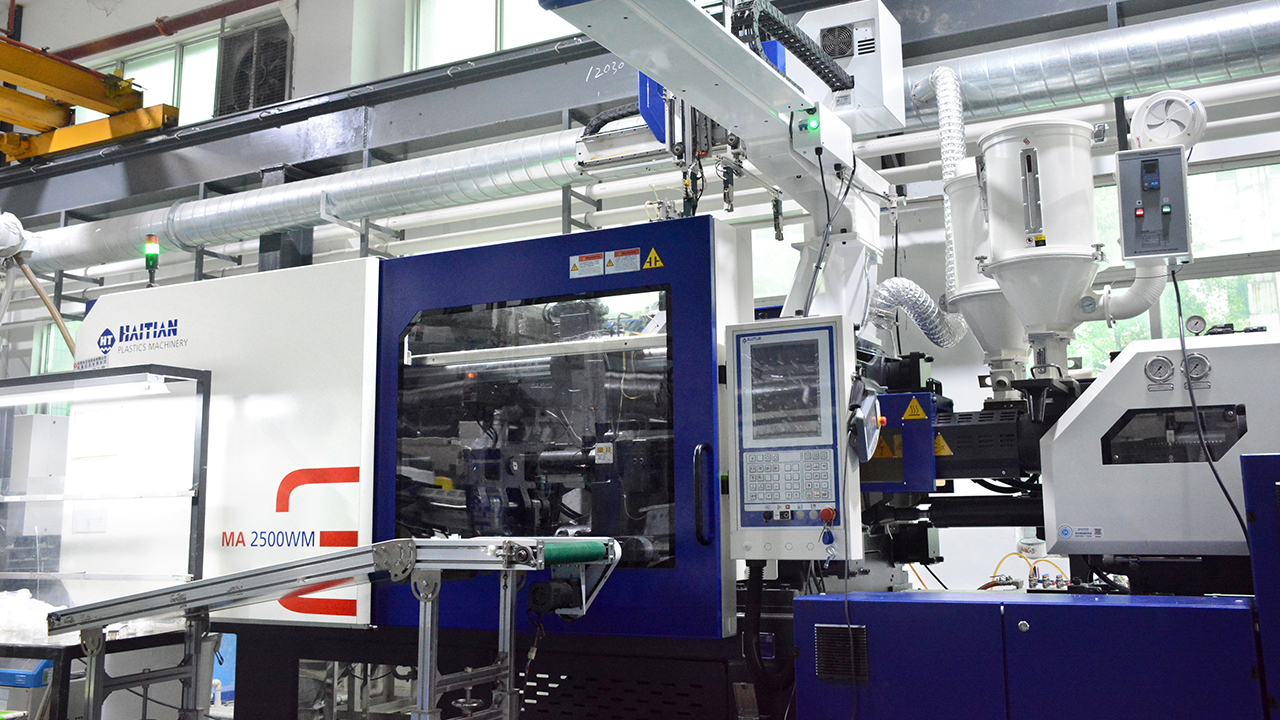
Dual-Shot Molds: Single mold with two cavities (for first/second shots) and a rotating platen—ideal for high-volume production (e.g., 100,000+ parts/month). The platen rotates the substrate from the first cavity to the second, enabling continuous molding.
Two-Station Molds: Two separate molds (one for substrate, one for overmold) with robotic transfer of substrates—suitable for low-to-medium volume or large parts (e.g., automotive dashboard components) that can’t fit in dual-shot molds.
Gating Design: Overmold gates must be placed to avoid direct impingement on the substrate (prevents substrate warping). For example, use edge gates for TPE overmolds on flat substrates.
Cooling Systems: Separate cooling circuits for substrate and overmold materials—critical for materials with different melting points (e.g., PC melts at 280℃, TPE at 180℃). Uneven cooling causes delamination or part distortion.
Precision Locators: Mold inserts or pins to fix the substrate in place during the second shot—ensuring overmold material covers only target areas (tolerance ±0.01mm for small parts like electronics connectors).
Draft Angles: 1-3° draft angles on overmold surfaces to prevent sticking—especially important for soft materials like TPE, which can tear if demolded.
Products: Phone cases (PC + TPU), wireless earbud charging cases (ABS + soft TPE), laptop hinges (metal + TPE).
Value: Shock absorption (protects devices), soft-touch edges (comfort), and integrated sealing (dust/water resistance).
Products: Surgical forceps handles (stainless steel + 硅胶), insulin pen grips (PP + medical TPE), catheter connectors (PC + biocompatible TPE).
Value: Biocompatibility (meets ISO 10993), anti-slip grip (reduces surgical errors), and leak-proof seals (prevents fluid contamination).
Products: Steering wheel inserts (plastic + leather-grain TPE), door handle grips (ABS + soft TPU), sensor housings (metal + TPE).
Value: Vibration dampening (improves ride comfort), wear resistance (withstands 100,000+ touches), and weatherproofing (resists UV/heat).
Products: Power tool handles (nylon + TPE), kitchen knife handles (ABS + rubber-like TPE), water bottle lids (PP + seal).
Value: Durability (resists impact/scratches), ergonomics (reduces hand fatigue), and leak prevention (saves product waste).
| Material Delamination | Incompatible material pairs or poor bonding | Choose proven material combinations (e.g., ABS + TPE); add bonding agents to overmold material. |
| Overmold Flash | Poor mold alignment or excessive injection pressure | Use precision mold components (e.g., guide pins with ±0.002mm tolerance); reduce injection pressure for soft materials. |
| Substrate Warping | Uneven cooling or high overmold temperatures | Add cooling channels near substrate areas; lower overmold injection temperature (within material limits). |
Sustainable Materials: Growth of bio-based overmold materials (e.g., plant-derived TPE) to replace petroleum-based options—driven by consumer demand for eco-friendly products.
3D-Printed Overmolds: 3D printing of small-batch overmold parts (e.g., custom medical device prototypes) to reduce mold development time (from 4 weeks to 3 days).
Smart Overmolding: Integration of sensors (e.g., pressure sensors in overmolded grips) to create “smart” products—e.g., a fitness tracker handle that measures grip force.