| Quantity: | |
|---|---|
YIXUN mold
8480419090
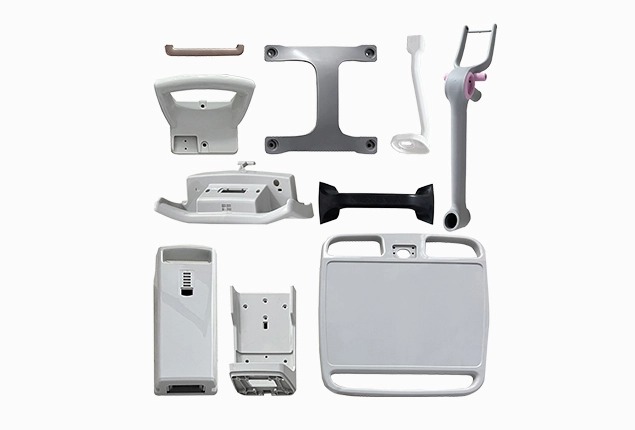
Specialized injection molding process injecting nitrogen gas into the melt to create hollow sections, reduce material usage, and minimize sink marks. Ideal for ABS and PP materials in multi-cavity configurations.
| Material | Gas Penetration | Surface Finish | Structural Integrity | Recommended Applications |
|---|---|---|---|---|
| ABS | Excellent | Very Good | High | Automotive trim, furniture, enclosures |
| PP | Very Good | Good | Medium-High | Consumer products, containers, panels |
Gas Injection System
Gas pins/nozzles: Strategically positioned in each cavity
Gas channels: Balanced distribution to all cavities
Sequential control: Individual cavity gas timing
Gas pressure: Typically 100-300 bar
Multi-Cavity Layout
Balanced filling: Through hot runner or cold runner systems
Cavity spacing: Adequate for cooling lines and gas channels
Family molds: Possible with gas assist for different parts
Cavity count: 2-32 cavities typical (depends on part size)
Cooling System Enhancement
Conformal cooling: Follows complex part geometry
Baffles/bubblers: For core cooling
Temperature control: ±2°C across all cavities
Short Shot Phase: 70-95% material injection
Gas Injection Phase: Nitrogen gas injection through dedicated pins
Gas Packing Phase: Gas maintains pressure during cooling
Gas Venting: Gas released before mold opening
Location: Thickest cross-sections (ribs, bosses, handles)
Size: 2-3 times wall thickness
Pattern: Follows natural flow paths
| Component | Specification | Purpose |
|---|---|---|
| Mold Base | LKM, HASCO, DME standard | Precision alignment |
| Core/Cavity Steel | H13, S136, NAK80 pre-hardened | Wear resistance |
| Gas Pins | Tungsten carbide tips | Durability under gas pressure |
| Seals | High-temperature Viton | Gas leakage prevention |
| Ejection System | Guided ejector plates | Precision part removal |
Cavity surfaces: SPI-B1/B2 (600-1200 grit polish)
Gas channels: Smooth finish to prevent gas turbulence
Textured areas: Available on non-gas-penetrated surfaces
Weight Reduction: 10-40% material savings
Reduced Sink Marks: Especially on ribs and bosses
Improved Surface Finish: Lower injection pressure
Lower Clamp Tonnage: Reduced by 30-60%
Hollow Sections: For fluid flow or wiring passages
Higher Stiffness: Better rigidity-to-weight ratio
Variable wall thickness in same part
Large flat surfaces without warpage
Integrated handles/grips without weld lines
Reduced residual stress
Automotive: Door panels, handles, trim components
Furniture: Chair shells, table bases, armrests
Electronics: Printer housings, computer enclosures
Consumer Goods: Tool handles, appliance panels
Containers: Stackable bins, storage boxes
Furniture: Outdoor chairs, lightweight tables
Industrial: Pallets, material handling components
Household: Laundry baskets, storage organizers
Process Optimization Trials
Short shot percentage determination
Gas delay time optimization
Pressure profiles for each cavity
Quality Inspection Points
Wall thickness uniformity: Ultrasound measurement
Gas channel penetration: Cross-section analysis
Surface quality: Sink mark inspection
Dimensional stability: CMM verification
Production Monitoring
Gas pressure sensors in each channel
Cavity pressure monitoring
Real-time SPC data collection
Hot Runner Preferred:
Individual temperature control
Balanced filling to all cavities
No runner waste (material savings)
Cold Runner Options:
Three-plate molds for automatic degating
Manifold designs for balanced flow
Gas penetration balance across cavities
Cooling uniformity for consistent cycle times
Ejection synchronization for automation
Shrinkage allowance: 0.5-0.8% for ABS, 1.5-2.5% for PP
Draft angles: 1-2° minimum (increased for textured areas)
Wall thickness: 2-6mm (thicker for gas channels)
Gas venting: 0.01-0.02mm clearance
Injection unit: Precision shot control capability
Gas assist unit: Nitrogen generator/control system
Clamp force: Reduced by 30-50% vs conventional molding
Control system: Capable of gas delay and pressure profiling
Higher initial cost: 20-40% more than conventional molds
Faster ROI: Through material savings and cycle time reduction
Per-part cost: Significantly lower at high volumes
Material savings: 10-40% per part
Cycle time reduction: 10-30% faster
Energy savings: Lower clamp force requirements
Quality improvement: Reduced scrap rates
Parts with thick sections or ribs
Large surface area components
Applications requiring weight reduction
Products needing hollow sections
High-volume production (>50,000 parts)
ABS: Excellent for structural components with good finish
PP: Ideal for cost-sensitive applications with moderate structural needs
When selecting a mold maker for gas-assisted multi-cavity molds:
Verify GAM experience: Request case studies and samples
Check gas system expertise: Experience with multiple gas injection technologies
Evaluate multi-cavity design capability: Previous successful projects
Review simulation capabilities: Mold flow analysis with gas assist modules
Inspect quality systems: Documentation and testing protocols