| Quantity: | |
|---|---|
YIXUN mold
8480419090
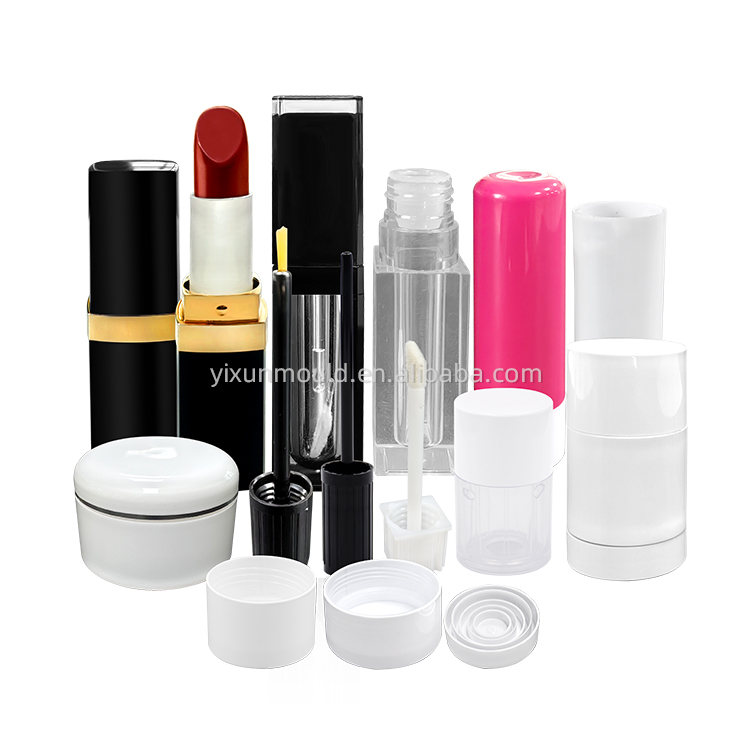
This specification covers ISO9001 certified injection molds designed specifically for manufacturing cosmetic covers and containers using Polypropylene (PP) and Acrylonitrile Butadiene Styrene (ABS) materials. These molds must meet aesthetic, functional, and regulatory requirements for cosmetic packaging applications.
Quality Management System ensuring consistent cosmetic-grade output
Customer Focus: Meeting brand-specific aesthetic requirements
Process Approach: Documented mold design, manufacturing, and maintenance
Traceability: Material and process documentation for batch tracking
Continual Improvement: Regular review of cosmetic finish quality
Supplier Management: Certified material suppliers with color consistency
| Property | Polypropylene (PP) | ABS | Cosmetic Application Considerations |
|---|---|---|---|
| Primary Use | Containers, jars, caps | Covers, housings, intricate parts | PP for flexibility/squeezability; ABS for rigidity |
| Surface Finish | High-gloss achievable | Excellent inherent gloss | Critical for brand perception |
| Chemical Resistance | Good (resists oils, alcohols) | Moderate (avoid acetone) | Must withstand cosmetic formulas |
| Color Consistency | Good, but can yellow | Excellent color stability | Critical for brand colors; color matching essential |
| Processing | High shrinkage (1.5-2.5%) | Moderate shrinkage (0.5-0.7%) | Mold design must account for shrinkage differences |
| Regulatory | Food-contact grades available | Must avoid residual monomers | Compliance with FDA, EU cosmetic regulations |
| Component | Steel Grade | Hardness | Surface Treatment | Cosmetic Rationale |
|---|---|---|---|---|
| Cavity/Core | Stainless Steel (S136, 420) | 48-52 HRC | Mirror polish (SPI-A1) | Best for cosmetic finish, corrosion resistance |
| Alternative | Pre-hardened (718H, NAK80) | 36-40 HRC | High polish | Cost-effective for good finish |
| Moving Parts | Tool Steel (H13, 2344) | 48-52 HRC | Nitrided/TiN coated | Wear resistance for sliding mechanisms |
| Ejector System | High-speed steel | 58-62 HRC | Polished | Minimize visible ejector marks |
| Texture Areas | As above | - | Texture etching (VDI 3400) | Grip surfaces, decorative patterns |
Surface Finish Standards:
SPI-A1: Mirror finish (Ra ≤ 0.012 μm) for high-gloss areas
SPI-A2: High gloss (Ra ≤ 0.025 μm) for most cosmetic surfaces
Textured Surfaces: Precise pattern replication (VDI, Mold-Tech standards)
No visible defects: Sink marks, flow lines, or weld lines unacceptable
Gating Strategy:
Hot runner systems strongly recommended (95%+ of cosmetic molds)
Valve gates for clean gate appearance and minimal vestige
Submarine/tunnel gates for hidden gate locations
Multiple gates for large containers to ensure aesthetic flow
Gate placement: Never on visible A-surface
Parting Line & Shut-Offs:
Fine parting lines (≤ 0.02mm clearance)
No flash tolerance on mating surfaces
Precise shut-offs for snap fits and closures
Venting carefully placed in non-visible areas
Closure Mechanisms:
Threads (single/multi-start) with smooth engagement
Snap fits with consistent retention force
Hinges (living or mechanical) for flip-top caps
Sealing surfaces for product containment
Ejection System:
Sleeve ejectors for round containers
Stripper plates for thin-walled containers
Air ejection assistance for textured surfaces
Early return system to protect cosmetic surfaces
Ejector placement: Strategic to minimize marks
Cooling Design:
Conformal cooling for uniform temperature
Baffles and bubblers for core/cavity cooling
Temperature control ±1°C for consistent finish
Cooling line placement to avoid cosmetic defects
First Article Inspection (FAI):
Complete dimensional report (CMM preferred)
Color match verification (spectrophotometer)
Surface gloss measurement (gloss meter)
Closure function testing (torque, engagement)
Process Control Documents:
Control Plan for critical cosmetic features
Inspection Instructions with acceptable/reject criteria
Color Standards with approved limits (ΔE values)
Surface Finish Standards with physical samples
Material Documentation:
Certificates of Analysis for each resin batch
Colorant certification for color consistency
Regulatory compliance certificates (FDA, EU, etc.)
Material traceability from receipt to production
Visual Standards:
Master samples for color and finish
Limit samples for acceptable defects
Light booth evaluation under multiple light sources
Microscopic inspection (10-50x magnification)
Functional Testing:
Closure torque testing (opening/closing cycles)
Leak testing for liquid containers
Drop testing (filled and empty)
Compatibility testing with cosmetic formulas
Consumer Experience Tests:
Feel test for surface smoothness
Sound test for closure satisfaction
Ergonomics of grip and opening
| Feature | Specification | Rationale |
|---|---|---|
| Wall Thickness | 0.6-1.2mm (thin for squeezability) | Lightweight, material savings |
| Draft Angles | 1-3° (more for textured surfaces) | Easy ejection, no dragging |
| Surface Finish | SPI-A1 or A2 (gloss), textured for grip | Premium appearance, functionality |
| Thread Design | Coarse pitch (for easy opening) | User-friendly, especially with wet hands |
| Gating | Valve gate hot runner (center or edge) | Clean appearance, balanced filling |
| Feature | Specification | Rationale |
|---|---|---|
| Wall Thickness | 1.5-2.5mm (structural rigidity) | Prevents flex, maintains shape |
| Draft Angles | 0.5-2° (can be minimal for fits) | Precision mating with containers |
| Surface Finish | SPI-A1 (high gloss) | Premium appearance, brand image |
| Snap Fits | Consistent retention force (±10%) | Secure closure, pleasant engagement |
| Gating | Multiple valve gates | Prevent warpage, ensure filling |
Color matching: Spectrophotometer with ΔE ≤ 1.0 tolerance
Masterbatch vs. compounded color: Decision based on volume
Regrind policy: Strict limits for cosmetic parts (≤10% recommended)
Purge procedures: Thorough between color changes
Class: ISO Class 8 for high-end cosmetics
Mold storage: Clean, humidity-controlled environments
Assembly/disassembly: Clean procedures to avoid contamination
Packaging: Clean, sealed for transport
| Frequency | Activities | Cosmetic Focus |
|---|---|---|
| Daily | Surface cleaning, lubrication check | Prevent cosmetic surface damage |
| Weekly | Polish inspection, ejector check | Maintain surface finish quality |
| Monthly | Hot runner maintenance, alignment check | Ensure consistent cosmetic output |
| Every 50K shots | Polish touch-up, component replacement | Restore aesthetic quality |
| Annual | Full disassembly, inspection, refurbishment | Extend mold life, maintain quality |
Specialized polishing technicians required
Texture replication after repair work
Documentation of all surface treatments
Back-up electrodes for textured areas
FDA 21 CFR (for US market)
EU Regulation EC 1223/2009 (for European market)
China NMPA (for Chinese market)
REACH compliance for chemical safety
GMP for manufacturing environment
PP: Must meet FDA CFR 177.1520 for food contact
ABS: Must have low residual monomer content
Colorants: Must be approved for cosmetic use
Additives: Must not migrate into cosmetic product
| Cost Factor | Economy Option | Premium Option | Recommended for Cosmetics |
|---|---|---|---|
| Steel Grade | P20/718 | Stainless S136 | Stainless S136 or equivalent |
| Finish | SPI-A2 | SPI-A1 | SPI-A1 for critical surfaces |
| Runner System | Cold runner | Hot runner with valve gates | Hot runner with valve gates |
| Cooling | Standard drilled | Conformal cooling | Conformal for critical areas |
| Ejection | Standard ejectors | Sleeve/air assist | Combination for best results |
Higher initial investment in mold (30-50% more than standard)
Lower per-part cost through hot runner efficiency
Reduced scrap rate through precise process control
Brand protection through consistent quality
Faster time-to-market with right-first-time approach
Certification: Valid ISO9001:2015 certificate
Cosmetic Experience: Portfolio of cosmetic mold projects
Polishing Expertise: In-house polishing specialists
Color Matching: Spectrophotometer and color lab
Texturing Capability: In-house or approved partners
Validation Support: Sample molding and testing
Account for shrinkage in thread design
Use living hinges for integrated flip-top designs
Consider gas-assisted molding for thick sections
Implement stack molds for high-volume production
Design for flatness to prevent warpage
Use insert molding for metal accents or logos
Consider double-shot molding for soft-touch areas
Implement quick-change inserts for design variations