
Views: 0 Author: Site Editor Publish Time: 2025-11-24 Origin: Site
Precision in medical device manufacturing is absolutely essential. The quality, safety, and effectiveness of medical devices depend heavily on how accurately they are produced. Even the smallest deviation in dimensions or surface finish can compromise a device’s performance or pose serious risks to patient health. Medical molds play a crucial role in achieving this level of precision by shaping components with exact specifications and consistent quality. At YIXUN, a professional supplier specializing in medical molds and molding services, we understand that precision is not just a goal but a necessity to meet the high standards of the healthcare industry and regulatory requirements worldwide.
Medical devices often require extremely complex geometries that demand intricate mold designs. These geometries can include microchannels in catheters, thin walls in syringes, snap-fit features in diagnostic devices, or intricate internal cavities for implantable parts. Designing molds that can accurately replicate such fine details presents multiple challenges. For example, molds must be engineered to allow the molten plastic or other materials to flow uniformly into every tiny corner without trapping air pockets or causing incomplete filling. This requires careful consideration of gate locations, cooling channels, and venting systems within the mold.
In addition, medical device components must meet strict dimensional tolerances — often in the range of microns — to ensure proper fit and function. Even slight variations during molding can lead to problems such as warping, shrinkage, or surface imperfections. These issues are commonly caused by factors like uneven cooling rates, residual stresses in the molded part, or variations in material viscosity. Furthermore, the choice of raw materials, such as biocompatible plastics, adds complexity since these materials may behave differently under molding conditions compared to standard plastics.
Common precision risks during molding include dimensional inaccuracies, such as parts being slightly larger or smaller than intended, surface defects like sink marks or flash, and inconsistent wall thicknesses that can weaken the part structurally. Maintaining repeatability is also a challenge, as even the same mold can produce slightly different results from cycle to cycle without proper process control. The combination of these factors means that achieving precision in medical molding demands both advanced design expertise and meticulous manufacturing practices.
The emergence of advanced manufacturing technologies has significantly improved the ability to produce high-precision medical molds. One of the most impactful technologies is 3D printing, which allows rapid prototyping of molds with extremely complex features that traditional CNC machining may struggle to achieve. Using additive manufacturing, mold designers can create prototype molds to verify designs and test fit and function before committing to expensive full-scale production molds. This reduces the risk of costly errors and shortens development cycles, enabling faster time-to-market for new medical devices.
Additionally, 3D printing enables the production of conformal cooling channels inside molds — channels that closely follow the shape of the molded cavity — which help achieve more uniform cooling. Uniform cooling is essential to prevent warping and shrinkage, thus improving dimensional accuracy and surface finish.
Real-time monitoring systems integrated into injection molding machines also play a crucial role in maintaining precision. These systems use sensors to continuously track parameters such as melt temperature, injection pressure, mold temperature, and cavity fill time. When deviations from preset values are detected, the system can automatically adjust process variables or alert operators to take corrective actions. This reduces variation between parts and ensures consistent quality throughout long production runs. The use of data analytics and machine learning in monitoring systems further enhances the ability to predict maintenance needs and avoid unexpected mold wear or failures.
At YIXUN, we combine the latest 3D printing technology with advanced real-time process monitoring to deliver molds that meet the most stringent precision standards. This integration of innovation and quality control helps our clients produce medical devices that perform reliably in critical healthcare applications.
Precision in medical molds translates directly into superior device performance, which is vital given the life-saving or life-enhancing roles many medical devices play. When components are molded with exact dimensions and flawless surfaces, they fit and function as intended. For example, precision in a valve component for an infusion pump ensures accurate fluid flow rates, while tight tolerances in an implant shell ensure biocompatibility and long-term stability within the human body.
Moreover, precise molding reduces the need for secondary processing steps such as machining or polishing, which can introduce contaminants or affect biocompatibility. This helps manufacturers maintain sterile production conditions and reduces manufacturing costs.
Patient safety is another critical benefit of precision molds. Devices produced with consistent quality are less likely to fail in use, preventing medical complications or recalls that could harm patients and damage brand reputation. Regulatory agencies such as the FDA require extensive testing and validation of medical devices, including the molds used to produce them. Investing in precision molds facilitates compliance with these regulations, speeding product approvals and market access.
Precision molding also supports innovations in medical device design. As devices become smaller and more complex, the ability to mold fine details precisely enables new functionalities and miniaturization that improve patient comfort and outcomes. By partnering with YIXUN, manufacturers gain access to mold solutions that push the boundaries of medical technology while maintaining uncompromised quality.
Maintaining precision during mass production is equally critical. High-quality molds alone are insufficient if production processes are not tightly controlled. Automated process controls play a key role by regulating injection speed, pressure, temperature, and cooling times to prevent variations that could affect part quality. These parameters are optimized based on initial mold validation and continuously monitored during production.
In-line inspection technologies, such as vision systems and laser scanners, can detect defects or dimensional deviations immediately after molding, enabling real-time feedback and quality assurance. Statistical process control (SPC) techniques are also employed to analyze production data and identify trends that might indicate drifting process conditions.
Regular mold maintenance is vital to sustaining precision. Molds experience wear from repeated cycles, which can lead to surface degradation, dimensional changes, or corrosion, all of which compromise the mold’s ability to produce consistent parts. Scheduled cleaning, polishing, and repair restore mold integrity and extend its service life. At YIXUN, we offer comprehensive mold maintenance services to ensure your molds continue to perform at peak precision throughout their lifespan.
Additionally, mold storage conditions and handling practices impact precision retention. Proper storage minimizes corrosion and damage when molds are not in use. Our team provides expert advice on mold care and management to help clients maximize their investment.
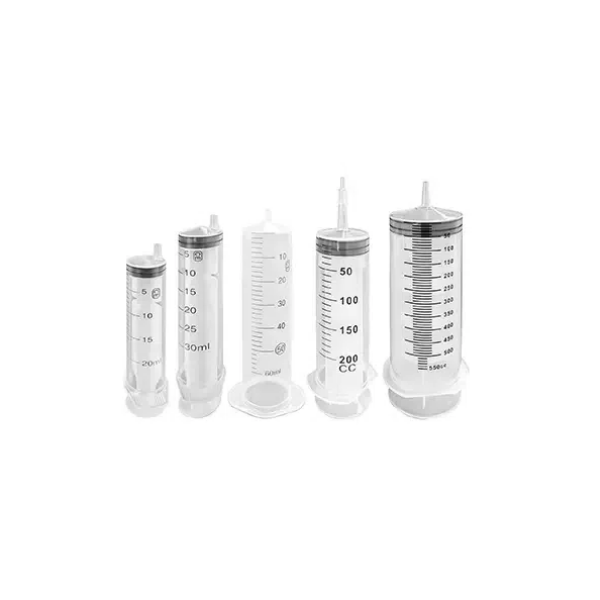
In conclusion, precision medical molds are indispensable for producing reliable, high-quality medical devices that meet the strict demands of the healthcare industry. They enable the accurate replication of complex device features, incorporate advanced technologies for enhanced control, and directly improve device performance and patient safety. YIXUN, as a professional supplier specializing in medical mold design, manufacturing, and injection molding services, is dedicated to providing precision mold solutions that help manufacturers achieve consistent quality and regulatory compliance. With our expertise and innovative approach, we support the delivery of medical devices that truly make a difference.
For more information about our precision medical molds and services, please contact us today. Our team at YIXUN is ready to assist you with tailored solutions to meet your specific medical device manufacturing needs.


