



| Quantity: | |
|---|---|
YIXUN mold
8480419090
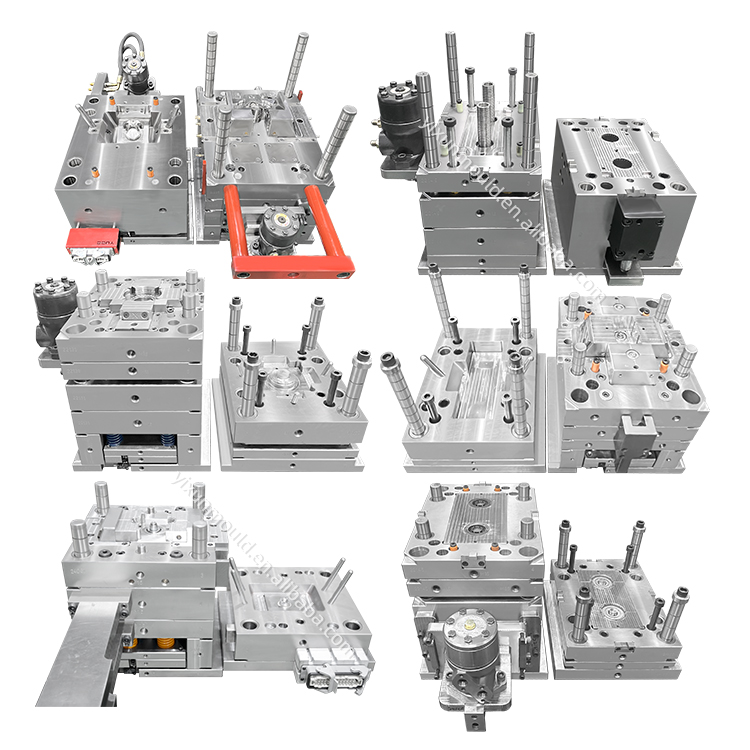
Heater Bands/Coils: Wrap around the runner manifold and nozzles to maintain precise temperature control (typically 150–350°C, tailored to plastic material properties);
Manifold: Distributes molten plastic from the injection machine’s sprue to multiple nozzles, with internal channels engineered for uniform flow;
Nozzles: Deliver melt directly into the mold cavity or gate, available in various designs (pin-point, valve-gated, edge-gated) to suit product requirements;
Temperature Controllers: Regulate heater output with ±1°C precision to prevent overheating or solidification of the melt;
Sealing Elements: Prevent plastic leakage and heat loss between components.
Eliminate Runner Scrap: Cold runner molds produce 15–40% of total plastic input as scrap (depending on product size and runner design), while hot runner systems reduce scrap to less than 1–2% (limited to minimal gate vestiges). For high-volume production (e.g., 1 million plastic parts annually), this translates to saving 5–20 tons of plastic per year;
Cost Savings on Recyclables: Even when cold runner scrap is recyclable, the energy and labor required for grinding, reprocessing, and reblending add 10–15% to production costs. Hot runner systems eliminate these downstream expenses entirely.
Reduced Injection Pressure & Clamping Force: Hot runner systems minimize pressure drop in the runner (by 30–50% compared to cold runners) due to maintained melt viscosity, allowing lower injection pressure. This reduces the injection machine’s energy consumption by 12–25%;
Shorter Cycle Times: Eliminating the need to cool and eject solid runners reduces cycle time by 15–30%. Faster cycles mean fewer machines are required for the same output, further lowering overall energy use. For example, a medical device component production line saw cycle times drop from 45s to 32s after adopting hot runners, reducing machine runtime by 29%;
Efficient Heat Management: Modern hot runner systems feature insulated manifolds and targeted heating, minimizing heat loss to the mold base and surrounding environment. Energy waste from heat dissipation is reduced by 40–60% compared to older hot runner designs.
Uniform Melt Flow: Precise temperature control ensures consistent melt viscosity across all gates, reducing part-to-part variation. Dimensional tolerances are improved by 20–30%, with fewer defects such as warpage, sink marks, or weld lines;
Cleaner Part Surfaces: Direct gating (without runner remnants) eliminates gate marks and post-processing needs (e.g., trimming), reducing labor costs and secondary energy use. This is critical for appearance-sensitive parts like consumer electronics casings or automotive interior components.
Multi-Cavity Molding: Hot runners enable efficient multi-cavity molds (with 8–128+ cavities) by ensuring equal melt distribution to each cavity. This boosts production output without sacrificing energy efficiency;
Compatibility with Advanced Materials: Hot runners handle high-performance engineering plastics (e.g., PEEK, PA66, LCP) and bio-based plastics—materials often used in energy-efficient products like electric vehicle (EV) components or renewable energy equipment. Temperature control can be tailored to the material’s specific melting point and flow characteristics.
Long Service Life: High-quality hot runner components (e.g., stainless steel manifolds, ceramic heaters) withstand repeated thermal cycles, with a service life of 500,000–1 million cycles—outlasting cold runner molds by 2–3 times;
Smart Monitoring: Modern systems integrate sensors for temperature, pressure, and flow rate, enabling predictive maintenance and reducing unplanned downtime. This further optimizes energy efficiency by avoiding inefficient operation due to component wear.
Automotive (EV & Hybrid): Molding of EV battery housings, interior trim, connector components, and lightweight structural parts. Hot runners reduce material waste for high-cost engineering plastics and align with automakers’ carbon-neutral goals (e.g., Tesla, Volkswagen use hot runners for 60–75% of their plastic components);
Consumer Electronics: Production of smartphone cases, laptop shells, and charger housings. Hot runners enable thin-wall molding (reducing material use) and consistent quality for high-volume orders;
Packaging: Manufacturing of recyclable plastic bottles, caps, and food containers. Hot runners boost output (up to 1 million units per day for caps) while minimizing scrap, supporting the circular economy;
Medical Devices: Molding of syringes, catheters, and implant components. Precision temperature control ensures compliance with sterile and material purity requirements, while zero scrap reduces contamination risks;
Renewable Energy: Production of solar panel frames, wind turbine components, and battery storage parts. Hot runners handle durable, weather-resistant plastics efficiently, supporting the growth of green energy infrastructure.
IoT Integration: Real-time data monitoring (temperature, pressure, energy use) via cloud-based platforms allows for remote optimization and energy management. AI algorithms can adjust heating and flow parameters to minimize energy consumption while maintaining quality;
Energy Recovery: Next-generation systems incorporate heat recovery modules, capturing waste heat from manifolds and reusing it to preheat incoming plastic or warm the mold base—reducing energy input by an additional 8–12%.
Bio-Based Heater Insulation: Manufacturers are adopting plant-based or recycled insulation materials for manifolds, reducing the environmental impact of hot runner production;
Minimalist Manifold Designs: 3D-printed manifolds with optimized flow channels reduce material use in the hot runner system itself, while improving heat distribution and energy efficiency.
Micro-Hot Runners: Specialized systems for micro-injection molding (parts weighing <1g) feature ultra-precise temperature control and low-volume flow management. This supports energy-efficient production of micro-components for wearable devices, medical sensors, and electronics—industries driving demand for miniaturized, sustainable products.


