Views: 0 Author: Site Editor Publish Time: 2026-08-25 Origin: Site
Transitioning from single-shot production with manual assembly to multi-material manufacturing requires a significant upfront investment in tooling. You must carefully weigh this heavy initial capital expense against long-term production efficiencies and part quality. For engineers and procurement teams, evaluating this process means balancing part complexity, production volume, and strict tolerance requirements. Traditional assembly often introduces failure points and slows down overall manufacturing speed. You need a highly reliable method to consolidate parts while maintaining stringent performance standards across every production batch.
This guide provides a structured framework for assessing technical feasibility, mitigating design risks, and calculating the true ROI of consolidating parts via a 2K process. We will explore advanced material compatibility matrices, crucial engineering design rules, and effective supplier evaluation strategies. You will gain actionable insights to confidently optimize your next manufacturing project and reduce post-molding assembly bottlenecks.
Tooling vs. Unit Cost: 2K molds demand 30-50% higher initial tooling investments but eliminate downstream assembly, typically yielding positive ROI at volumes exceeding 50,000 units.
Superior Bonding: Achieves molecular-level chemical adhesion between hard and soft plastics, outperforming mechanical fasteners or adhesives in durability and IP-rating seals.
Design Constraints: Success relies heavily on matched shrinkage rates and strict adherence to material compatibility matrices (e.g., ABS with TPE).
Risk Mitigation: Precision in gate placement, shut-off angles, and thermal management is critical to prevent flash, bleeding, and delamination.
We define 2K injection molding as an automated, continuous manufacturing process. The system injects two different polymers into the same mold during a single machine cycle. Engineers often compare this advanced technique against older, multi-step manufacturing styles. Grasping these differences helps you make better procurement and engineering decisions.
Let us look closely at how it differs from traditional methods. Two shot molding utilizes a rotating platen or a robotic transfer system inside one specialized machine. The machine injects the first material, the platen rotates 180 degrees, and the machine immediately injects the second material. It delivers extremely high precision. Cycle times remain remarkably fast because the part never leaves the machine environment. You will find it ideal for high-volume production runs where dimensional stability matters most.
Conversely, traditional over molding typically involves manually transferring a finished first-shot substrate. Operators remove the rigid part from the first machine and load it into a second mold. The process runs slower. You face a much higher risk of contamination from human hands, dust, or machine oil. However, this older method requires a lower initial tooling cost because you can use two standard, simpler molds.
You can view 2K molding as a specific, highly controlled subset of multi material molding. It perfectly suits zero-defect tolerance requirements. It completely removes human error from the substrate transfer phase. The continuous thermal state of the first shot also promotes vastly better adhesion when the second material enters the cavity.
You must break down the manufacturing economics to justify the initial expenditure. The higher structural complexity of a 2K mold pays off quickly at scale. It eliminates secondary operations like ultrasonic welding, chemical gluing, and manual fastener assembly. You save direct labor costs immediately. Hitting the 50,000-unit threshold typically tips the scales toward a positive return on investment. The cost per unit drops drastically once you eliminate post-processing steps.
Consider the enhanced structural integrity of the final component. Chemical bonding during the melt phase creates superior peel strength. This bond easily outperforms post-process adhesives or snap-fit mechanisms. The molecular entanglement between the two plastic resins ensures the layers stay fused under stress. Your parts survive harsh environmental conditions much better.
Precision and tolerance control also improve drastically. Eliminating physical transfers between different machines reduces stack-up tolerances. If you mold two parts separately, each part carries a specific tolerance range. Assembling them doubles your potential dimensional variance. Injecting both materials in the same mold locks the dimensions in place. You minimize part warp. The process ensures highly repeatable dimensional accuracy across hundreds of thousands of cycles.
Finally, supply chain consolidation reduces business risk. You manage one supplier, one tool, and one finalized SKU. This approach dramatically simplifies your logistics. Coordinating multiple separate components, various shipping routes, and third-party assembly houses often causes costly delays. Managing one consolidated tool keeps your production schedule strictly on track and reduces inventory management headaches.
Let us explore core applications and industry-specific success criteria. Different industries demand unique performance metrics. Consolidation helps meet these rigorous standards effortlessly.
Medical Devices: Focus heavily on biocompatibility and sterility. Applications include surgical instruments featuring non-slip soft grips. You also see it in hermetically sealed housings for diagnostic equipment. The seamless bond eliminates microscopic gaps where bacteria usually hide. The parts easily withstand repeated high-heat autoclave sterilization cycles.
Automotive Components: Engineers prioritize vibration dampening and fluid resistance. Applications include integrated engine gaskets and HVAC system seals. Multi-color interior buttons also rely heavily on this process. It enables durable day/night backlit designs where a clear polymer transmits light through a dark, opaque housing. The bond prevents fluids and dirt from penetrating the dashboard electronics.
Consumer Electronics: Manufacturers emphasize waterproofing, drop protection, and premium aesthetics. Real-world examples include IP68-rated smartwatch housings. The soft overmold absorbs impact energy, while the rigid core protects internal chips. You also find impact-resistant power tool handles designed for ergonomic comfort. Transparent windows set directly into opaque chassis provide seamless user interfaces without needing secondary adhesive seals.
You need a definitive stance on material pairing before cutting any tool steel. We distinguish clearly between chemical adhesion and mechanical interlocking. Chemical adhesion fuses materials at a molecular level during the high-heat melt phase. Excellent examples include pairing polycarbonate (PC) with thermoplastic polyurethane (TPU). Another strong combination pairs acrylonitrile butadiene styrene (ABS) with thermoplastic elastomer (TPE).
Mechanical interlocking relies on physical undercuts designed into the rigid substrate. The second material flows into these gaps. It locks into place as it cools and shrinks. While useful, we highly recommend prioritizing chemical adhesion for superior, long-lasting performance.
You must ensure compatible melt temperatures. The order of injection matters immensely. Always inject the higher-temperature material first. For instance, PC melts at a much higher temperature than TPU. If you reverse the process and inject PC over a TPU substrate, the intense heat will distort or completely melt the first shot. Proper thermal management prevents these costly failures.
Table: Common Material Adhesion Compatibility Matrix
First Shot Substrate (Rigid) | Second Shot (Soft/Overmold) | Chemical Adhesion Level | Common Application |
|---|---|---|---|
Polycarbonate (PC) | TPU | Excellent | Electronic housings, wearable devices |
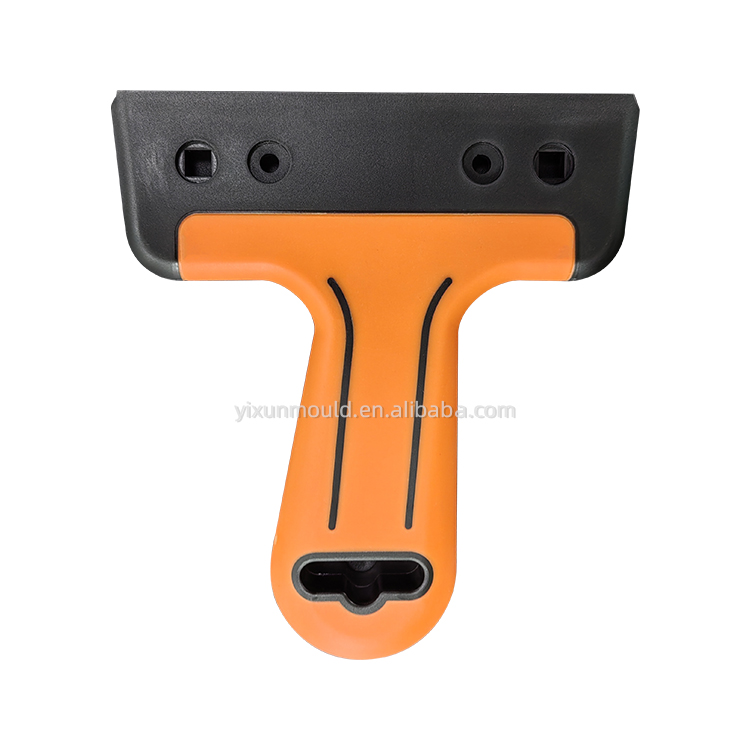
ABS | TPE | Excellent | Tool handles, consumer appliance grips |
Nylon (PA) | TPE | Poor to Moderate | Requires mechanical interlocking undercuts |
Polypropylene (PP) | TPV | Good | Automotive seals, fluid gaskets |
The first shot must remain structurally rigid. It needs to withstand the high injection pressure generated during the second shot phase. If the first shot bends or deflects under pressure, you will get deformed parts or severe flash. Design the rigid substrate with robust internal ribbing.
Shrinkage management poses a massive engineering challenge. You risk severe part warping when mating materials exhibiting vastly different shrink rates. As plastics cool in the mold, they contract. If a soft elastomer shrinks at 3% and the rigid core shrinks at 0.5%, the soft material acts like a tightened rubber band. It will bow the entire part like a banana.
We recommend maintaining balanced nominal wall thickness ratios. The rigid substrate should generally be thicker than the overmolded layer. Keep the second shot thickness consistent throughout the part. Sudden transitions from thick to thin soft layers cause unpredictable cooling stresses and surface sink marks.
Specify minimum shut-off angles in your CAD model. We typically require 5° to 7° for multi-material interfaces. This steep angle prevents the second material from flashing or bleeding over the cosmetic faces of the first substrate. Proper shut-offs create clean, crisp aesthetic lines between the two colors or textures.
Your gating strategy requires careful planning. You must position the gate for the second shot perfectly. Avoid placing the gate exactly where high-pressure flow washes out the first shot surface. High-velocity plastic hitting a warm substrate can re-melt the surface and cause color smearing. Flow dynamics dictate precise gate sizing. You want the second material to flow smoothly over the substrate without inducing massive shear stress.
Transparently discussing risks helps you avoid them during mass production. Common defects include delamination, flash, and short shots. Delamination happens due to poor chemical bonding. It often indicates contaminated materials or improper melt temperatures. Flash occurs at the substrate interface if steel shut-offs fail or lack sufficient clamping force. Short shots result from complex venting requirements. Trapped air prevents the second material from filling the entire cavity.
Use this strict checklist to evaluate manufacturer expertise before awarding a contract. Vetting a partner thoroughly prevents catastrophic production delays.
Equipment Capabilities: Look for demonstrated experience operating modern rotational platen machinery. Retrofitted single-shot machines often lack the precise clamping control needed for dual-barrel injection.
Engineering Expertise: Insist on in-house mold flow analysis (DFM) capabilities. They must clearly understand multi-material thermal dynamics. Ask to see simulation reports from previous projects.
Quality Assurance: Verify they employ stringent first-article inspection (FAI) protocols. They should also perform rigorous peel-testing. A coordinate measuring machine (CMM) is necessary to verify the complex geometries of the combined part.
Reiterate the core message before finalizing your production strategy. Strict design rules exist for a reason. High capital prerequisites apply to the tooling phase. However, consolidating materials remains the most robust solution available today. It consistently dominates high-volume, multi-functional component manufacturing across demanding industries.
Take immediate action to mitigate upfront risks. Submit your preliminary CAD models for a thorough DFM review. Validate material compatibility matrices early in the prototyping phase. Establish your baseline tooling costs before committing to a final physical architecture. Proper planning ensures a smooth transition into profitable, high-yield mass production.
A: A well-maintained mold easily produces over one million cycles. Manufacturers typically use high-grade tool steel like H13 or S136. These qualify as SPI Class 101 molds. The hardened steel withstands the high pressures of dual injection processes. Proper preventative maintenance ensures the rotating mechanisms remain highly precise over years of continuous production.
A: Yes, 3K molding exists. However, it requires highly specialized machinery with a third injection barrel. The tooling complexity increases exponentially. We usually find it economically unviable unless production volumes are extraordinarily high. Most product designs achieve their functional goals utilizing only two materials. Adding a third introduces unnecessary manufacturing risks.
A: Quality control teams conduct standardized peel tests. These destructive testing methods measure the exact pulling force required to separate the layers. We follow ASTM standards to verify chemical adhesion. A successful bond usually results in a cohesive failure. This means the soft material tears apart before the actual bond line separates.
A: Yes, it is highly feasible. Automotive taillight lenses frequently use this combination. You also see it heavily in waterproof electronic displays. The process injects a clear polycarbonate window alongside an opaque ABS housing. Strict thermal control prevents the opaque resin from bleeding into the transparent section. It creates a seamless, watertight finish.